Ruto Clarifies Government Position on Mitumba Trade, Says No Ban Planned
President William Ruto has firmly stated that the Kenyan government has no plans to ban the importation of second-hand clothes, commonly known as mitumba.
He emphasized that the trade remains important to millions of Kenyans and will continue to be protected under current government policy, even as international trade discussions continue.
The President made these remarks on Tuesday during a meeting with leaders of Nairobi markets at State House, Nairobi.
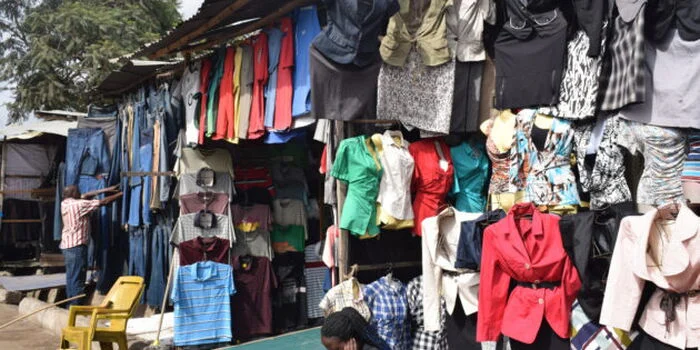
While responding to concerns raised by traders about the future of the mitumba business, Ruto assured them that the government understands how critical the sector is, especially for low- and middle-income households that depend on affordable clothing.
Ruto explained that although some countries, including a few within the region, have chosen to completely ban mitumba imports, Kenya is taking a different approach.
According to him, the government is focused on maintaining a fair balance that allows both the second-hand clothing market and the local textile industry to grow side by side in a sustainable way.
“You have asked to clearly understand the government’s position and policy on mitumba clothing,” Ruto said. “Despite several countries deciding to ban mitumba, we in Kenya will continue to respect a balanced approach.
A large section of our population depends directly on this industry, and for that reason, our policy will not change.”
He further noted that the government recognizes the need to support local clothing manufacturers while at the same time protecting traders and consumers who rely on mitumba. Ruto stressed that the goal is not to eliminate one market in favor of another, but to ensure both can coexist without harming livelihoods.
The President also mentioned that Kenya is closely watching developments in the United States regarding the African Growth and Opportunity Act (AGOA), which plays a key role in trade relations between Africa and the U.S.
However, he made it clear that regardless of AGOA-related discussions, Kenya’s position on mitumba imports remains unchanged.
In the past, the future of the mitumba trade has been a topic of national debate. In 2022, then Trade Cabinet Secretary Moses Kuria suggested that the government could consider banning second-hand clothes, but only after the local textile industry was strong enough to produce affordable clothing for Kenyans.
His comments were aimed at reviving local manufacturing and creating more jobs within the textile sector.
Kuria later clarified that he was not proposing an immediate ban. Instead, he explained that the long-term plan was to make locally produced clothes cheaper and more competitive, allowing mitumba to gradually lose its dominance as consumers naturally shift to locally made alternatives.
His remarks, however, sparked intense debate among politicians, economists, traders, and the general public.
Despite the discussions, the mitumba industry continues to be a major pillar of Kenya’s economy. The country imports tens of thousands of tonnes of second-hand clothing every year. In the first three months of 2025 alone, Kenya brought in more than 53,000 tonnes of mitumba, with a total value estimated at Ksh6.5 billion.
Studies and industry data show that around 24.2 million Kenyans regularly buy or wear mitumba clothes, highlighting how deeply the trade is embedded in everyday life across the country.
For many families, mitumba offers the most affordable option, with most households spending less than Ksh1,000 every three months on second-hand clothing.
Beyond affordability, the sector also plays a huge role in employment. The mitumba trade directly supports over two million jobs, including traders, transporters, port workers, loaders, and tailors. For many families, income from this industry is the main source of livelihood.
With his latest remarks, President Ruto has sought to reassure traders and consumers alike that the government remains committed to protecting the mitumba sector while also encouraging the growth of local manufacturing, ensuring economic balance and stability for millions of Kenyans.
Join Gen z Official WhatsApp Channel to share your thoughts and stay updated on time
https://whatsapp.com/channel/0029VaWT5gSGufImU8R0DO30